• 844-LHPOWER (844-547-6937)
  • Get A Quote
  • Shop LionHeart Swag
LionHeart Critical Power Specialists
  • Services
    • Generator Maintenance
    • Automatic Transfer Switch
    • Switchgear Services
    • Fire Pump Engine Maintenance
    • Load Bank Testing
    • Fuel Maintenance
  • Solutions
    • Control Panel Retrofits
    • Generator Replacement
    • Radiator Replacement
    • Leak Detection Equipment Installation
    • Permanent Load Bank Installation
    • Remote Monitoring + Control
  • Industries
    • Healthcare
    • Data Centers
    • Property Management
    • Industrial
    • Education
    • Government Offices
  • Equipment
    • Generator Rentals
  • Service Area
    • Illinois
    • Wisconsin
    • Indiana
    • Michigan
  • About
    • Our Company
    • Careers
    • Blog
    • FAQ
  • Contact
  • Menu Menu

How an Automatic Transfer Switch Works: A Facility Manager’s Guide

The automatic transfer switch is the single component between your utility feed and your generator that decides, in milliseconds, whether your building stays powered during an outage. Understanding how an automatic transfer switch works is the foundation of any serious backup power program, and most facility managers have never seen the sequence explained in plain terms.

What an Automatic Transfer Switch Is

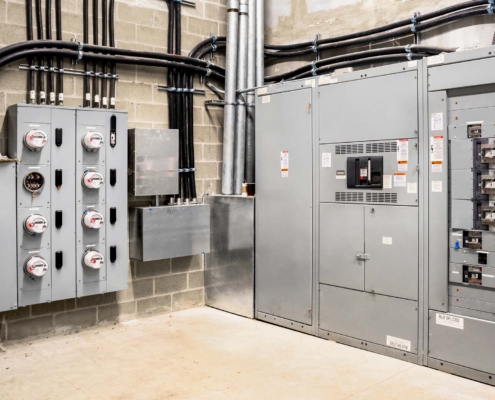
The ATS is an automatic switching device installed between two power sources: the utility feed and the emergency generator. Its job is to continuously monitor utility power and, when that power falls outside acceptable voltage or frequency thresholds, initiate the transfer sequence that moves your facility to emergency power without human intervention. What is an automatic transfer switch at its core? It is the component that converts a passive standby generator into an active backup power system the moment the grid fails.

Where the ATS Sits Between the Utility Feed and Your Generator

The ATS sits downstream of the utility meter and upstream of your main distribution panel. When utility power is present, the switch keeps the normal source contacts closed and passes utility power through to the building. The generator sits connected but idle. When the ATS detects a utility loss, it opens the normal source contacts, signals the generator to start, and holds the transfer until the generator reaches the voltage and frequency required to safely accept load before closing the emergency source contacts. This is the sequence that separates a facility that stays operational during an outage from one that goes dark.

A Quick Word on Open vs Closed Transition

Transfer switches operate in one of two modes. An open transition switch, the most common type, opens the connection to utility power completely before closing the connection to generator power, creating a brief interruption of a few seconds during which neither source is connected. A closed transition switch briefly connects both sources simultaneously, eliminating that gap. Closed transition is preferred in facilities where even a momentary interruption is unacceptable, such as healthcare facilities running surgical suites or life safety systems where any break in power creates a patient safety risk.

How an ATS Transfer Switch Senses and Responds to an Outage

The response sequence of an ATS transfer switch is fast, precise, and fully automated. It begins the moment utility voltage or frequency falls outside the acceptable range and ends when the load is fully transferred to generator power. Understanding how this sequence works helps facility managers recognize when the system is performing correctly and when something in the chain requires attention.

Detecting the Loss of Utility Power

The ATS continuously monitors voltage and frequency on the utility feed. When voltage drops below a programmed threshold, typically around 85 percent of nominal voltage, or when frequency deviates outside acceptable limits, the switch registers a utility failure. This detection happens in cycles that repeat many times per second, which is why the ATS responds in milliseconds rather than seconds. Most switches are programmed with a short confirmation delay to distinguish between a sustained utility loss and a brief voltage dip from a starting motor or passing storm before initiating the transfer sequence.

Signaling the Generator to Start and Reach Voltage and Speed

Once the ATS confirms a utility failure, it sends a start signal to the generator. The generator cranks, fires, and begins building toward its rated voltage and frequency output. The ATS monitors the generator during this warmup period and holds the transfer open until the generator reaches stable operating conditions. This window, which typically runs ten to thirty seconds depending on the generator and its programming, is the period NFPA 110 Type 10 facilities must complete within ten seconds of utility loss. During that window, the facility runs on whatever stored power its UPS systems can supply.

Transferring the Load, Then Returning to Utility When It Stabilizes

When the generator reaches acceptable voltage and frequency, the ATS closes the emergency source contacts and transfers the full facility load to generator power. The building is now running on emergency power and the ATS continues monitoring the utility feed throughout the outage. When utility power returns and stabilizes within acceptable parameters, the ATS waits through a programmed time delay to confirm the utility source is solid before initiating a retransfer. Load returns to the utility, the generator runs through a cooldown cycle, and the system returns to standby condition, ready for the next event.

LionHeart’s EGSA-certified technicians keep every link in that transfer sequence tested, documented, and performing to spec across commercial and industrial facilities throughout Illinois, Wisconsin, Indiana, and Michigan.

Schedule ATS Service

Signs Your ATS Needs Attention

Knowing how an automatic transfer switch works makes it easier to recognize when it is not working correctly. The ATS is a mechanical and electrical device that wears over time, and the failure modes it develops follow predictable patterns. Catching these signs before a real outage is the difference between a scheduled service call and a crisis response in the dark.

Failed, Delayed, or Chattering Transfers

A transfer that does not happen at all is an obvious failure, but delayed and chattering transfers are subtler and more damaging over time. A delayed transfer means the ATS is taking longer than programmed to complete the sequence, which can exhaust UPS systems before emergency power arrives. Chattering occurs when the ATS repeatedly switches back and forth between sources, driven by an unstable utility feed or voltage sensitivity settings that are calibrated too tightly. Both conditions accelerate wear on contactors and control components. Automatic transfer switch troubleshooting for these symptoms typically involves inspecting voltage sensing relays, verifying time delay settings, and testing contactor condition under load.

Contactor Wear and Control Faults

The main contacts inside an ATS carry full load current every time a transfer occurs, and repeated operations cause arcing and erosion at the contact surfaces. A generator maintenance program that includes ATS inspection will identify contact pitting, carbon deposits, and signs of overheating before they cause a transfer failure under real conditions. Control board faults, failed sensing relays, and battery backup failures in microprocessor-controlled switches are additional failure points that functional testing and visual inspection surface before an outage does.

Why ATS Testing Belongs in Your Maintenance Plan

The only way to confirm a transfer switch will perform during an actual outage is to test it under realistic conditions. Monthly manual transfer exercises verify basic operation, but a complete ATS service involves exercising the switch through a full transfer cycle, measuring transfer timing, inspecting contactors, verifying relay calibration, and documenting every result. Pairing ATS service with load bank testing gives the most complete picture of system performance, confirming that the switch transfers correctly and the generator accepts full load in a single coordinated test. The published ATS vs generator maintenance comparison covers how these two service scopes fit together and why managing them separately creates gaps in system readiness.

Keep Every Link in Your Power Chain Ready With LionHeart

How an automatic transfer switch works from first detection to full load transfer is a sequence that has to execute correctly every single time, under any conditions, without warning. A backup power program is only as reliable as the component making the millisecond decision to switch, and that component requires the same planned service attention as the generator it calls into service. LionHeart’s EGSA-certified team delivers ATS service, generator maintenance, and complete backup power programs for commercial and industrial operations across Illinois, Wisconsin, Indiana, and Michigan. Reach out today to put a service plan in place that keeps every part of the handoff working as designed.

Share This Post

  • Share on Facebook
  • Share on X
  • Share on WhatsApp
  • Share on Pinterest
  • Share on LinkedIn
  • Share on Tumblr
  • Share on Vk
  • Share on Reddit
  • Share by Mail

More Like This

Arc Flash Hazards And Switchgear

Arc Flash Hazards and Switchgear: What Facility Managers Need to Know

Switchgear Maintenance
https://lionheartpower.com/wp-content/uploads/2026/07/Arc-Flash-Hazards-and-Switchgear.jpg 1250 2000 Abstrakt Marketing /wp-content/uploads/2025/10/LionHeart-Critical-Power-Specialists-Logo-October-2025-Inbound-SDR.png Abstrakt Marketing2026-07-30 15:46:152026-09-10 10:44:32Arc Flash Hazards and Switchgear: What Facility Managers Need to Know
Switchgear Inspection Checklist

Switchgear Inspection Checklist: What Technicians Look for During a Service Visit

Switchgear Maintenance
https://lionheartpower.com/wp-content/uploads/2026/07/Switchgear-Inspection-Checklist.jpg 1250 2000 Abstrakt Marketing /wp-content/uploads/2025/10/LionHeart-Critical-Power-Specialists-Logo-October-2025-Inbound-SDR.png Abstrakt Marketing2026-07-15 17:59:052026-07-15 17:59:10Switchgear Inspection Checklist: What Technicians Look for During a Service Visit
Switch2

What’s the Difference Between Open-Air vs Metal-Enclosed Switchgear?

Switchgear Maintenance
https://lionheartpower.com/wp-content/uploads/2025/12/switch2.jpg 1250 2000 Abstrakt Marketing /wp-content/uploads/2025/10/LionHeart-Critical-Power-Specialists-Logo-October-2025-Inbound-SDR.png Abstrakt Marketing2026-07-15 17:52:112026-07-15 17:52:57What’s the Difference Between Open-Air vs Metal-Enclosed Switchgear?
Switchgear Facility Maintenance

Switchgear Maintenance: What Every Facility Manager Needs to Know

Switchgear Maintenance
https://lionheartpower.com/wp-content/uploads/2026/07/Switchgear-Facility-Maintenance.jpg 1250 2000 Abstrakt Marketing /wp-content/uploads/2025/10/LionHeart-Critical-Power-Specialists-Logo-October-2025-Inbound-SDR.png Abstrakt Marketing2026-07-15 17:45:522026-09-10 10:44:00Switchgear Maintenance: What Every Facility Manager Needs to Know
Previous Previous Previous Next Next Next

Categories

  • Automatic Transfer Switches
  • Fire Pumps
  • Fuel Maintenance
  • Generator Maintenance
  • Load Bank Testing
  • Radiator Replacement
  • Switchgear Maintenance
Lionheart Critical Power Specialists Logo October 2025 Inbound Sdr White

13151 Executive Ct.
Huntley, IL 60142

[email protected]

844.547.6937

Website by Abstrakt Marketing Group ©
  • Privacy Policy
  • Sitemap
Scroll to top Scroll to top Scroll to top

This site uses cookies. By continuing to browse the site, you are agreeing to our use of cookies.

AcceptLearn more

Cookie and Privacy Settings


How we use cookies

We may request cookies to be set on your device. We use cookies to let us know when you visit our websites, how you interact with us, to enrich your user experience, and to customize your relationship with our website.

Click on the different category headings to find out more. You can also change some of your preferences. Note that blocking some types of cookies may impact your experience on our websites and the services we are able to offer.

Essential Website Cookies

These cookies are strictly necessary to provide you with services available through our website and to use some of its features.

Because these cookies are strictly necessary to deliver the website, refusing them will have impact how our site functions. You always can block or delete cookies by changing your browser settings and force blocking all cookies on this website. But this will always prompt you to accept/refuse cookies when revisiting our site.

We fully respect if you want to refuse cookies but to avoid asking you again and again kindly allow us to store a cookie for that. You are free to opt out any time or opt in for other cookies to get a better experience. If you refuse cookies we will remove all set cookies in our domain.

We provide you with a list of stored cookies on your computer in our domain so you can check what we stored. Due to security reasons we are not able to show or modify cookies from other domains. You can check these in your browser security settings.

Other external services

We also use different external services like Google Webfonts, Google Maps, and external Video providers. Since these providers may collect personal data like your IP address we allow you to block them here. Please be aware that this might heavily reduce the functionality and appearance of our site. Changes will take effect once you reload the page.

Google Webfont Settings:

Google Map Settings:

Google reCaptcha Settings:

Vimeo and Youtube video embeds:

Accept settingsHide notification only
  • Call Now
  • Contact Us
  • Shop Swag