• 844-LHPOWER (844-547-6937)
  • Get A Quote
  • Shop LionHeart Swag
LionHeart Critical Power Specialists
  • Services
    • Generator Maintenance
    • Automatic Transfer Switch
    • Switchgear Services
    • Fire Pump Engine Maintenance
    • Load Bank Testing
    • Fuel Maintenance
  • Solutions
    • Control Panel Retrofits
    • Generator Replacement
    • Radiator Replacement
    • Leak Detection Equipment Installation
    • Permanent Load Bank Installation
    • Remote Monitoring + Control
  • Industries
    • Healthcare
    • Data Centers
    • Property Management
    • Industrial
    • Education
    • Government Offices
  • Equipment
    • Generator Rentals
  • Service Area
    • Illinois
    • Wisconsin
    • Indiana
    • Michigan
  • About
    • Our Company
    • Careers
    • Blog
    • FAQ
  • Contact
  • Menu Menu

What’s the Difference Between Open-Air vs Metal-Enclosed Switchgear?

Switchgear is one of those facility systems that tends to get categorized as a single thing until a question about service or installation changes the conversation. In reality, the switchgear services your facility needs depend heavily on which type you have, and understanding open-air vs. metal-enclosed switchgear affects everything from how the equipment is maintained to who can safely work near it.

What Is Switchgear and Why Does the Type Matter?

Switchgear is the combination of disconnects, fuses, circuit breakers, and controls that manage the flow of electrical current through a facility. It protects equipment from faults, distributes power to different loads, and allows operators to isolate sections of the electrical system for maintenance or emergencies. Understanding the types of commercial switchgear in your building is the starting point for any reliable service program, because the equipment type shapes the protocols, intervals, and expertise every service visit requires.

How Switchgear Fits Into Your Power System

In a backup power configuration, switchgear sits between the power source and the loads it feeds, governing how power is distributed across the facility when a generator comes online after an outage. In facilities running paralleling switchgear systems, the switchgear also coordinates multiple generator sets, synchronizing voltage, frequency, and phase before closing breakers and sharing load across the system. Every service decision for your power infrastructure starts with knowing what type of switchgear is in place.

What Is Open-Air Switchgear?

When evaluating open-air vs. metal-enclosed switchgear, the design difference is the first thing to understand. Open-air switchgear, sometimes called open bus or live bus switchgear, uses bare conductors and bus bars without a surrounding protective enclosure. The energized components are exposed within a room or switchgear lineup, relying on physical clearances and barriers between phases rather than a metal housing to provide isolation from the outside environment.

This design is typically found in large utility substations and high-voltage transmission environments where the scale of the installation makes full enclosure impractical. Open-air configurations allow for direct access to components during maintenance, but that access places significant demands on the switchgear installation environment. Strict arc flash protocols, authorized-personnel restrictions, and substantial physical clearance requirements are standard operating conditions for working around open-air equipment.

Where Open-Air Switchgear Is Typically Used

Open-air switchgear is most common in utility-grade and transmission-level applications where voltage levels and physical scale make enclosed equipment a less practical choice. Generating stations, large industrial sites with outdoor electrical yards, and high-voltage distribution networks all rely on open configurations. Buildings with space constraints, occupied work environments, and standard industrial voltage levels almost always use enclosed designs instead. The distinction matters when planning a service program, since maintenance protocols, safety clearances, and technician qualifications differ considerably between the two.

What Is Metal-Enclosed Switchgear?

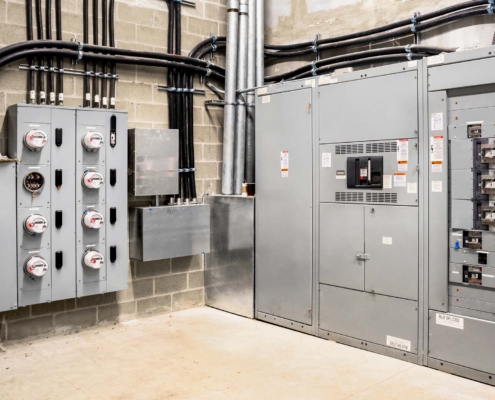
The other side of the open-air vs. metal-enclosed switchgear comparison is far more common in commercial and industrial facilities. Metal-enclosed switchgear houses all current-carrying components, buses, and connections inside a grounded metal enclosure, physically separating the energized parts from the surrounding environment. That design significantly reduces arc flash exposure risk and makes the equipment practical for use in occupied commercial and industrial buildings.

Within this category, there are meaningful distinctions. Metal-clad switchgear isolates each major component, including the circuit breaker, bus bars, and cable terminations, into separate grounded compartments within the enclosure. This compartmentalization limits the damage path if a fault occurs, making metal-clad configurations the preferred choice for healthcare facilities and data centers where any arc event could trigger catastrophic downtime.

Where Metal-Enclosed Switchgear Makes Sense

Metal-enclosed switchgear is the standard for most commercial and industrial applications. Manufacturing plants, property management operations, institutional buildings, and industrial facilities all depend on it. The enclosed design keeps the switchgear installation environment manageable, limits exposure to dust and contaminants that degrade insulation over time, and makes it practical to install equipment in rooms where personnel are regularly present. The vast majority of commercial switchgear LionHeart services across Illinois, Wisconsin, Indiana, and Michigan falls into this category.

Key Differences Between Open-Air and Metal-Enclosed Switchgear

The decision between open-air vs. metal-enclosed switchgear comes down to three areas: safety exposure, environmental requirements, and maintenance access. Understanding each one helps facility managers confirm which type they are working with and what a proper service program looks like for their equipment.

Safety and Arc Flash Exposure

Safety is the most immediate distinction. Open-air equipment leaves energized conductors within a defined clearance zone, creating a significantly larger arc flash boundary and demanding more rigorous personal protective equipment for anyone working nearby. Metal-enclosed designs contain that risk within the housing, which is why enclosed switchgear is the baseline expectation for commercial facilities.

Environmental and Installation Requirements

Open-air configurations require a dedicated outdoor yard or a strictly controlled indoor space with substantial clearance distances. Metal-enclosed switchgear is designed for standard indoor electrical rooms and handles the dust, moisture, and temperature variation present in typical commercial environments.

Maintenance Access and Documentation

Metal-enclosed gear commonly uses draw-out or plug-in circuit breaker designs that allow for safer component service while portions of the bus remain energized. Enclosed systems lend themselves more readily to standardized service records and the compliance tracking that regulated facilities require.

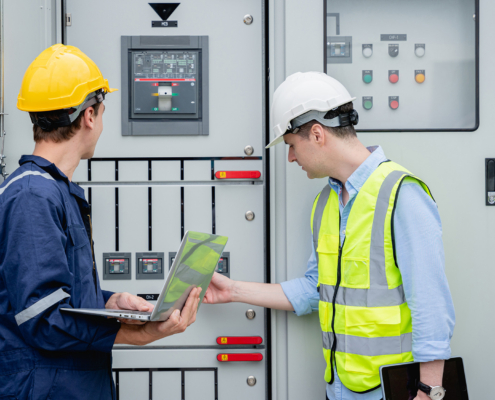
LionHeart’s EGSA-certified technicians service metal-enclosed switchgear across commercial and industrial facilities throughout Illinois, Wisconsin, Indiana, and Michigan. Reach out today and let’s build a maintenance plan that keeps your electrical system running at peak performance year-round.

Schedule Your Switchgear Service

How to Know Which Type Your Facility Has or Needs

For most facility managers working in an established commercial or industrial building, the switchgear in the electrical room is already metal-enclosed. Open-air configurations are almost never found in occupied commercial spaces, so if your facility runs standard industrial or commercial voltage, enclosed switchgear is the strong default assumption. If you are unsure what you have, a site assessment from a qualified provider is the most reliable way to confirm equipment type before scheduling service.

If you are evaluating a new installation or planning a major upgrade, the right choice between open-air vs metal-enclosed switchgear depends on your voltage level, available space, safety requirements, and the nature of the operating environment. High-voltage applications above 38kV sometimes move toward open-air or gas-insulated designs. Below that threshold, metal-enclosed switchgear is the industry standard for commercial and industrial builds.


Working With a Qualified Switchgear Service Provider

Knowing which type of switchgear your facility operates is foundational to building the right service program. Maintenance intervals, testing procedures, documentation requirements, and safety protocols all look different depending on the equipment in place. Pairing your routine switchgear maintenance with load bank testing ensures your full power system is verified under actual operating conditions, giving you documentation that stands up under inspection and confidence that your system will perform when it matters most.

Know Your Switchgear, Protect Your Operation

Open-air vs. metal-enclosed switchgear represent two fundamentally different approaches to electrical distribution, and that distinction shapes every service decision your facility makes. Commercial and industrial buildings run on metal-enclosed equipment, built for safety, reliability, and serviceability in occupied spaces. Knowing what you have and maintaining it on a consistent schedule keeps your electrical system performing the way it was designed to. Facilities that let service intervals lapse face unplanned outages, failed inspections, and the liability exposure that comes with unmaintained electrical equipment.

LionHeart’s EGSA-certified team brings hands-on expertise across all major switchgear configurations throughout the Midwest. Contact us today to build a maintenance program built around your equipment and your operation.

Share This Post

  • Share on Facebook
  • Share on X
  • Share on WhatsApp
  • Share on Pinterest
  • Share on LinkedIn
  • Share on Tumblr
  • Share on Vk
  • Share on Reddit
  • Share by Mail

More Like This

Switchgear Inspection Checklist

Switchgear Inspection Checklist: What Technicians Look for During a Service Visit

Switchgear Maintenance
https://lionheartpower.com/wp-content/uploads/2026/07/Switchgear-Inspection-Checklist.jpg 1250 2000 Abstrakt Marketing /wp-content/uploads/2025/10/LionHeart-Critical-Power-Specialists-Logo-October-2025-Inbound-SDR.png Abstrakt Marketing2026-07-15 17:59:052026-07-15 17:59:10Switchgear Inspection Checklist: What Technicians Look for During a Service Visit
Worker Inspecting Switchgear

Switchgear Maintenance: What Every Facility Manager Needs to Know

Switchgear Maintenance
https://lionheartpower.com/wp-content/uploads/2025/12/Worker-inspecting-switchgear.jpg 1250 2000 Abstrakt Marketing /wp-content/uploads/2025/10/LionHeart-Critical-Power-Specialists-Logo-October-2025-Inbound-SDR.png Abstrakt Marketing2026-07-15 17:45:522026-07-15 17:47:24Switchgear Maintenance: What Every Facility Manager Needs to Know

Categories

  • Fire Pumps
  • Generator Maintenance
  • Load Bank Testing
  • Radiator Replacement
  • Switchgear Maintenance
Lionheart Critical Power Specialists Logo October 2025 Inbound Sdr White

13151 Executive Ct.
Huntley, IL 60142

[email protected]

844.547.6937

Website by Abstrakt Marketing Group ©
  • Privacy Policy
  • Sitemap
Scroll to top Scroll to top Scroll to top

This site uses cookies. By continuing to browse the site, you are agreeing to our use of cookies.

AcceptLearn more

Cookie and Privacy Settings


How we use cookies

We may request cookies to be set on your device. We use cookies to let us know when you visit our websites, how you interact with us, to enrich your user experience, and to customize your relationship with our website.

Click on the different category headings to find out more. You can also change some of your preferences. Note that blocking some types of cookies may impact your experience on our websites and the services we are able to offer.

Essential Website Cookies

These cookies are strictly necessary to provide you with services available through our website and to use some of its features.

Because these cookies are strictly necessary to deliver the website, refusing them will have impact how our site functions. You always can block or delete cookies by changing your browser settings and force blocking all cookies on this website. But this will always prompt you to accept/refuse cookies when revisiting our site.

We fully respect if you want to refuse cookies but to avoid asking you again and again kindly allow us to store a cookie for that. You are free to opt out any time or opt in for other cookies to get a better experience. If you refuse cookies we will remove all set cookies in our domain.

We provide you with a list of stored cookies on your computer in our domain so you can check what we stored. Due to security reasons we are not able to show or modify cookies from other domains. You can check these in your browser security settings.

Other external services

We also use different external services like Google Webfonts, Google Maps, and external Video providers. Since these providers may collect personal data like your IP address we allow you to block them here. Please be aware that this might heavily reduce the functionality and appearance of our site. Changes will take effect once you reload the page.

Google Webfont Settings:

Google Map Settings:

Google reCaptcha Settings:

Vimeo and Youtube video embeds:

Accept settingsHide notification only
  • Call Now
  • Contact Us
  • Shop Swag