• 844-LHPOWER (844-547-6937)
  • Get A Quote
  • Shop LionHeart Swag
LionHeart Critical Power Specialists
  • Services
    • Generator Maintenance
    • Automatic Transfer Switch
    • Switchgear Services
    • Fire Pump Engine Maintenance
    • Load Bank Testing
    • Fuel Maintenance
  • Solutions
    • Control Panel Retrofits
    • Generator Replacement
    • Radiator Replacement
    • Leak Detection Equipment Installation
    • Permanent Load Bank Installation
    • Remote Monitoring + Control
  • Industries
    • Healthcare
    • Data Centers
    • Property Management
    • Industrial
    • Education
    • Government Offices
  • Equipment
    • Generator Rentals
  • Service Area
    • Illinois
    • Wisconsin
    • Indiana
    • Michigan
  • About
    • Our Company
    • Careers
    • Blog
    • FAQ
  • Contact
  • Menu Menu

NFPA 110 Generator Requirements Explained for Hospitals & Healthcare Facilities

When the lights flicker in a hospital, every second matters. Surgeons mid-procedure, ventilators keeping patients alive, imaging equipment in the middle of a scan, server rooms holding decades of patient records. None of it can afford a gap in power. That is why the NFPA 110 generator requirements exist, and why healthcare facilities face some of the strictest emergency power standards of any industry. If you manage a hospital, surgery center, or large clinic, understanding these rules is the difference between a smooth Joint Commission survey and a costly citation.
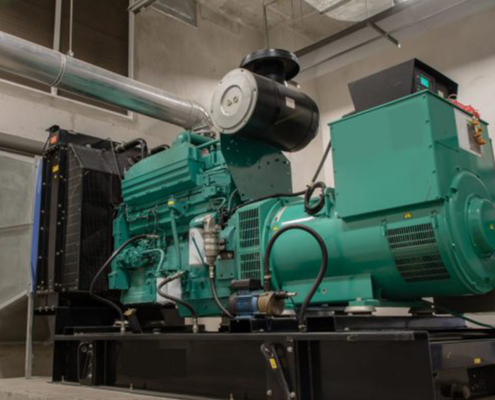
Let’s break down what NFPA 110 actually demands, how it overlaps with other regulations, and where most hospitals slip up.

What NFPA 110 Covers in Healthcare Facilities

NFPA 110 is the national standard for emergency and standby power systems, and it spells out exactly how generators serving life-safety loads must be designed, installed, tested, and maintained. For hospitals, the stakes are higher because patient survival can depend directly on uninterrupted power.

EPSS Classifications, Levels, and Types

The standard organizes emergency power supply systems (EPSS) into Classes, Types, and Levels. Class refers to how long the system must run on its own fuel supply. Type defines how quickly power must be restored after an outage, with Type 10 systems required to provide power within 10 seconds. Level establishes the consequences of failure, and hospitals fall under Level 1, the most demanding category, because failure could cause loss of life or serious injury. Healthcare facilities typically need a Level 1, Type 10, Class X system, which means rapid response, extended runtime, and rigorous testing throughout the year.

How NFPA 110 Connects to Joint Commission and CMS Compliance

Hospital generators do not exist in a regulatory vacuum. NFPA 110 is one piece of a much larger compliance picture, and surveyors expect facilities to demonstrate alignment across every framework that touches emergency power.

Regulatory Overlap and Survey Expectations

NFPA 99, the Health Care Facilities Code, references NFPA 110 directly when describing essential electrical systems. The Joint Commission then incorporates both standards into its Environment of Care chapter, while the Centers for Medicare and Medicaid Services (CMS) requires compliance through its Conditions of Participation. In practical terms, a single generator failure can trigger findings under all four frameworks at once. Surveyors will ask for testing logs, maintenance records, and proof that hospital generator requirements have been met without exception. Documentation gaps are treated as compliance gaps, even if the underlying maintenance was performed correctly.

Monthly, Annual, and 36-Month Generator Testing Requirements

Testing is the heartbeat of NFPA 110 compliance, and hospital generator testing requirements are unforgiving when it comes to frequency and load. A generator that sits idle until the next outage is a generator nobody can trust.

Runtime, Load Percentages, and Load Bank Testing

Each month, hospitals must run their generators under load for at least 30 minutes. Diesel units need to operate at no less than 30 percent of nameplate kilowatt rating, or meet the manufacturer’s recommended exhaust gas temperature. If monthly testing does not consistently hit that 30 percent threshold, an annual load bank test becomes mandatory. Every 36 months, a four-hour run is required to confirm that the system can sustain extended operation. Fuel quality testing is also expected annually, since stored diesel degrades, attracts moisture, and grows microbial contamination over time.

Healthcare compliance is too important to leave to chance, and our EGSA-certified technicians know NFPA 110 generator requirements inside and out. Explore more about our maintenance that ensures compliance.

Our Generator Maintenance

Transfer Switch Inspection Requirements

A generator can start perfectly and still leave a hospital in the dark if the automatic transfer switch (ATS) fails to send power where it needs to go. NFPA 110 treats transfer switches as critical components, and so should every facilities team.

ATS Maintenance, Common Failures, and Intervals

Transfer switches require monthly operational testing alongside the generator, plus annual inspections that include cleaning, contact checks, and verification of timing settings. Common ATS failures include burned or pitted contacts, failed control boards, stuck relays, and miscalibrated voltage sensors. Older electromechanical switches are especially prone to issues, which is why retrofit programs have become so popular in aging hospitals. Skipping ATS maintenance is one of the fastest ways to fail a survey.

Documentation Hospitals Must Maintain

If a test happened but nobody wrote it down, surveyors will treat it as if it never occurred. Documentation is not paperwork for paperwork’s sake. It is the legal record of compliance, and hospitals are expected to keep it organized and accessible.

Logs, Records, and Reports

Required records include monthly and annual maintenance logs, fuel quality reports, battery inspection results, alarm and event histories from the generator controller, transfer switch test logs, and corrective action documentation for any deficiency found. All of these must be retained for the life of the equipment in most cases, and surveyors will sample randomly across multiple years. Digital recordkeeping systems make this far easier, but only if they are maintained consistently and backed up.

Common NFPA 110 Compliance Violations

Most violations are not dramatic. They are quiet oversights that compound over months until a surveyor walks through the door.

The Usual Suspects

The most frequent findings include missed monthly tests, incomplete or missing documentation, battery failures caused by aging or loose connections, fuel contamination from untreated diesel, neglected cooling systems with low coolant or clogged radiators, and exhaust system corrosion. Many of these issues are inexpensive to fix when caught early and devastating when ignored. A dead start battery is a $200 problem on Tuesday and a Joint Commission citation on Wednesday.

The Risks of Deferred Generator Maintenance

Hospitals operate on thin margins, and maintenance budgets often face pressure when other priorities compete for funding. Deferring generator service may look like savings on paper, but the downside risk is severe.

What Happens When Power Fails

A generator that does not start during an outage can mean canceled surgeries, displaced patients, lost imaging studies, and crashed servers holding electronic health records. Beyond the immediate patient safety implications, hospitals face potential regulatory penalties, loss of CMS reimbursement eligibility, malpractice exposure, and reputational damage that lingers long after the lights come back on. Insurance carriers may also raise premiums or limit coverage following a documented failure.

How to Prepare for a Joint Commission Generator Inspection

Preparation is the difference between confidence and panic when a surveyor arrives. The hospitals that pass surveys cleanly are the ones that treat every day like inspection day.

Internal Audits, Checklists, and Coordination

Start with an internal audit at least 90 days before any anticipated survey window. Use a compliance checklist that mirrors NFPA 110 generator requirements in chapter 8, and walk through every generator, transfer switch, and fuel storage system on site. Coordinate closely with your maintenance vendor to confirm that all testing intervals have been met and documented. Train clinical and facilities staff on emergency power procedures, including what to do if the generator fails to transfer. Mock surveys can reveal gaps in minutes that would otherwise take a real surveyor to find.

Partner With LionHeart for Hospital Generator Compliance You Can Trust

Meeting NFPA 110 generator requirements is one of the most important responsibilities a healthcare facility carries, because the stakes go far beyond paperwork. Patients, staff, and entire communities depend on backup power that performs when called upon, and surveyors expect proof at every turn. Proactive testing, careful documentation, and a trusted maintenance partner are the foundation of true readiness. LionHeart helps hospitals stay compliant and confident year-round.

Share This Post

  • Share on Facebook
  • Share on X
  • Share on WhatsApp
  • Share on Pinterest
  • Share on LinkedIn
  • Share on Tumblr
  • Share on Vk
  • Share on Reddit
  • Share by Mail

More Like This

Lionheart Worker In Hardhat Looking At Laptop

Your Annual Generator Maintenance Checklist for Commercial Buildings

Generator Maintenance
https://lionheartpower.com/wp-content/uploads/2025/10/Lionheart-worker-in-hardhat-looking-at-laptop.jpg 1250 1545 Abstrakt Marketing /wp-content/uploads/2025/10/LionHeart-Critical-Power-Specialists-Logo-October-2025-Inbound-SDR.png Abstrakt Marketing2026-07-01 08:44:152026-07-01 08:44:18Your Annual Generator Maintenance Checklist for Commercial Buildings
Teal Generator P84j6r9modk32msk86qx9gd8g15b2njy3w0jpapqcg

How Often Should Commercial Generators Be Serviced? A Practical Guide for Facilities Managers

Generator Maintenance
https://lionheartpower.com/wp-content/uploads/2025/10/teal-generator-p84j6r9modk32msk86qx9gd8g15b2njy3w0jpapqcg.jpg 1250 2000 Abstrakt Marketing /wp-content/uploads/2025/10/LionHeart-Critical-Power-Specialists-Logo-October-2025-Inbound-SDR.png Abstrakt Marketing2026-07-01 08:23:552026-07-01 08:24:02How Often Should Commercial Generators Be Serviced? A Practical Guide for Facilities Managers
Cat Generator

Commercial Generator Rentals: Planned Maintenance, Emergency Outages & Project Power

Generator Maintenance
https://lionheartpower.com/wp-content/uploads/2025/10/CAT-Generator.jpg 1250 1545 Abstrakt Marketing /wp-content/uploads/2025/10/LionHeart-Critical-Power-Specialists-Logo-October-2025-Inbound-SDR.png Abstrakt Marketing2026-06-30 14:34:132026-06-30 14:34:15Commercial Generator Rentals: Planned Maintenance, Emergency Outages & Project Power
Workers Installing Generator

Generator vs. ATS Maintenance: Why You Need Both Serviced (and Why Most Providers Only Do One)

Generator Maintenance
https://lionheartpower.com/wp-content/uploads/2025/10/Workers-installing-generator.jpg 1250 1546 Abstrakt Marketing /wp-content/uploads/2025/10/LionHeart-Critical-Power-Specialists-Logo-October-2025-Inbound-SDR.png Abstrakt Marketing2026-06-29 10:45:172026-07-15 18:00:13Generator vs. ATS Maintenance: Why You Need Both Serviced (and Why Most Providers Only Do One)
yellow generator

Benefits of Load Bank Testing your Generator

Generator Maintenance
https://lionheartpower.com/wp-content/uploads/2025/11/yellow-generator.jpg 220 360 Paul Cook /wp-content/uploads/2025/10/LionHeart-Critical-Power-Specialists-Logo-October-2025-Inbound-SDR.png Paul Cook2020-05-12 20:13:212026-06-03 08:15:23Benefits of Load Bank Testing your Generator
Previous Previous Previous Next Next Next

Categories

  • Fire Pumps
  • Generator Maintenance
  • Load Bank Testing
  • Radiator Replacement
  • Switchgear Maintenance
Lionheart Critical Power Specialists Logo October 2025 Inbound Sdr White

13151 Executive Ct.
Huntley, IL 60142

[email protected]

844.547.6937

Website by Abstrakt Marketing Group ©
  • Privacy Policy
  • Sitemap
Scroll to top Scroll to top Scroll to top

This site uses cookies. By continuing to browse the site, you are agreeing to our use of cookies.

AcceptLearn more

Cookie and Privacy Settings


How we use cookies

We may request cookies to be set on your device. We use cookies to let us know when you visit our websites, how you interact with us, to enrich your user experience, and to customize your relationship with our website.

Click on the different category headings to find out more. You can also change some of your preferences. Note that blocking some types of cookies may impact your experience on our websites and the services we are able to offer.

Essential Website Cookies

These cookies are strictly necessary to provide you with services available through our website and to use some of its features.

Because these cookies are strictly necessary to deliver the website, refusing them will have impact how our site functions. You always can block or delete cookies by changing your browser settings and force blocking all cookies on this website. But this will always prompt you to accept/refuse cookies when revisiting our site.

We fully respect if you want to refuse cookies but to avoid asking you again and again kindly allow us to store a cookie for that. You are free to opt out any time or opt in for other cookies to get a better experience. If you refuse cookies we will remove all set cookies in our domain.

We provide you with a list of stored cookies on your computer in our domain so you can check what we stored. Due to security reasons we are not able to show or modify cookies from other domains. You can check these in your browser security settings.

Other external services

We also use different external services like Google Webfonts, Google Maps, and external Video providers. Since these providers may collect personal data like your IP address we allow you to block them here. Please be aware that this might heavily reduce the functionality and appearance of our site. Changes will take effect once you reload the page.

Google Webfont Settings:

Google Map Settings:

Google reCaptcha Settings:

Vimeo and Youtube video embeds:

Accept settingsHide notification only
  • Call Now
  • Contact Us
  • Shop Swag